
Biomedical Research
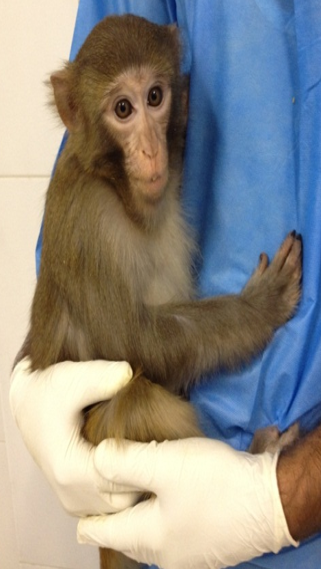 The Non-Human Primates Research Department of Royan Institute was established in 2006 for the implementation of the spinal cord injury treatment plan in the monkey model in cooperation with Loghman Hospital, in an area of 150 square meters. It can keep 4-6 sick monkeys and 5-10 healthy monkeys. It includes a bedroom, an individual storage room, two group storage cages, a surgery room, an examination room, a dressing room, and a storage room. In this section, spinal cord injury modeling and 274 treatment studies by various types of stem cells are being implemented.
In 2009, to develop the primate department, a shed with an area of 500 square meters on two floors was built and put into operation for the maintenance, breeding, and modeling of various incurable diseases and their treatment, which includes: three individual storage rooms, a group cage, storage space outside the quarantine room, operation room, recovery room, examination room, paraclinic department, cell laboratory and administrative building.
This department can keep about fifty rhesus monkeys (Rhesus Macaca mulatta), and currently, eighteen monkey collars are kept for conducting various research, and modern and advanced techniques and equipment such as storage cages, clinical examination, and treatment equipment are used for the maintenance, production, and breeding of monkeys. It is possible to perform complex surgeries in monkeys, such as brain biopsy, placing electrodes in the brain and placing head pos in the skull, as well as creating models of Parkinson's, diabetes, acute inflammatory kidney disease, skin, and kidney transplant models in this department,
Actions in progress:
- Modeling of spinal cord injury by contusion method and its treatment with the help of stem cells
- Modeling of acute kidney necrosis and its treatment with the help of mesenchymal stem cells
- Kidney transplant modeling
- Breeding of rhesus monkeys in captivity
- Providing various services including preparation, quarantine, preparation and maintenance and performing various surgeries and veterinary services to other institutions and research centers inside the country.
- The plan to start a department of restorative medicine in animals and livestock
- Designing a map of the National Primate Center
